Fitcy Health
Mental health care that starts with the right match.
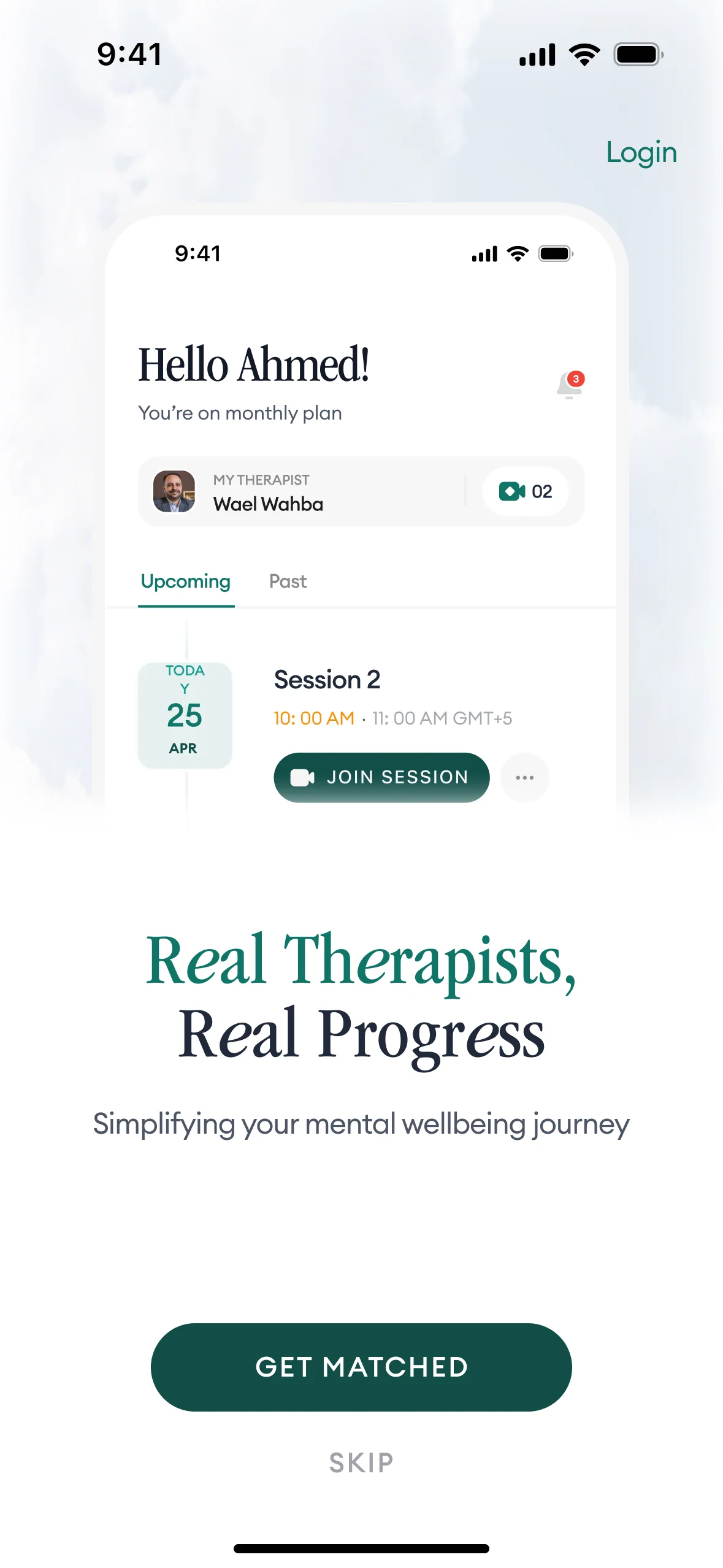
Fitcy Health pairs people with therapists who understand their culture and speak their language, then keeps sessions, messages, and resources in one place. Booking conversion up 25%.

Responsibilities
Research, Strategy & Design
Timeline
4 months
Contributors
Ahmed (me)
Mahham (Product Manager)
About Fitcy Health
Fitcy Health is a teletherapy platform built for the Gulf, where the hard part isn't finding a qualified therapist. It's finding one who speaks your language and understands the world you live in. I led design across the platform for four months alongside one product manager. This case study follows the client experience on web, iOS, and Android.
Challenges
Difficulty Finding the Right Therapist
Lack of Personalization & Cultural Sensitivity
Managing Appointments & Follow-Ups
No Way to Reach the Therapist Between Sessions
What People Want From a Therapist
Before touching the matching flow, we ran a survey on how people actually choose a therapist.
Survey Outcomes
Participants
55
Region
GCC
Gender Ratio
M: 40% | F: 60%
Method
Google Forms
Qualifications came first, at 30%, and that was the expected part. The next two slices were the brief: cultural sensitivity and therapeutic approach together took 40%, more than cost, availability, and reviews combined. People choose a therapist the way they choose someone to confide in, because that is what they are doing.
From WhatsApp to Self-Match
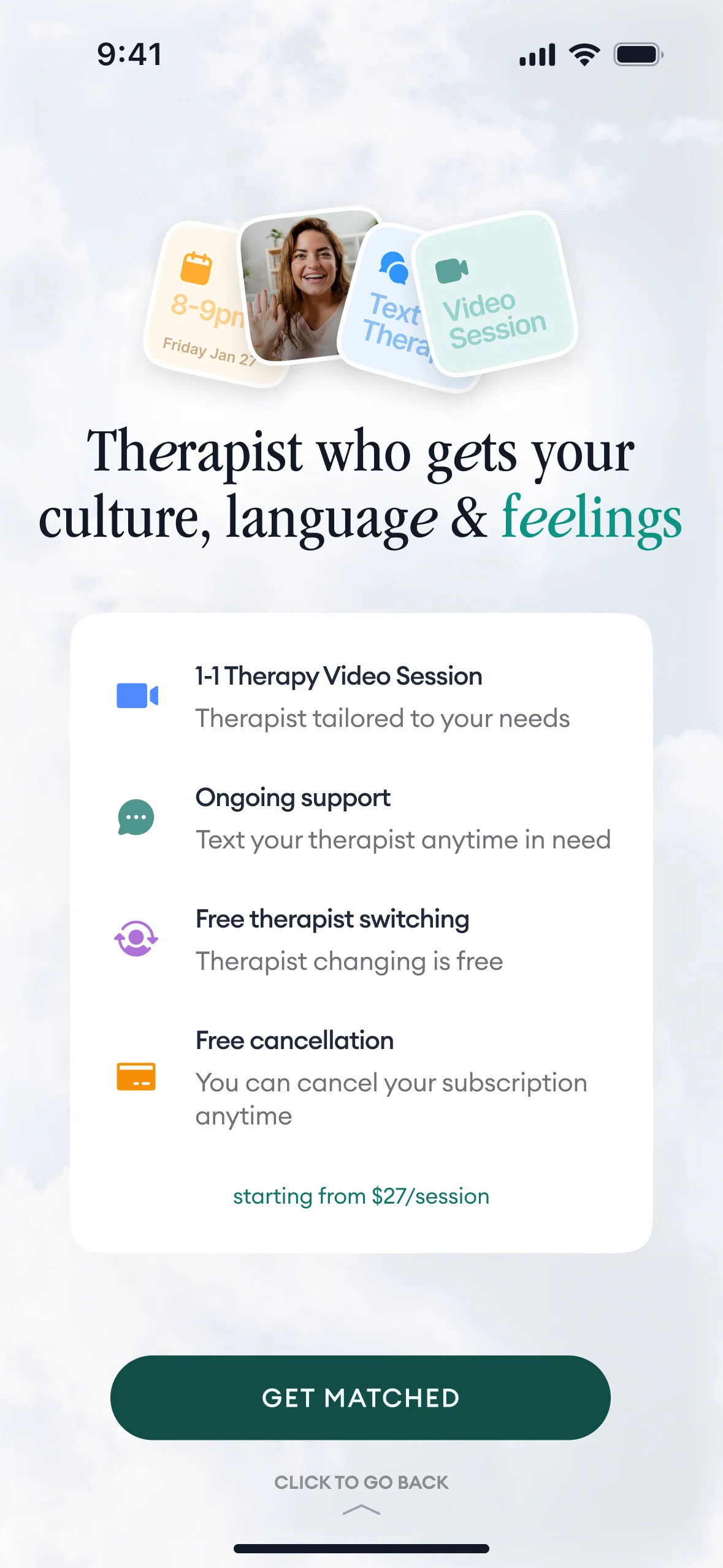
Matching used to be a person. A care-team member took requests over WhatsApp, read each one, and replied with a suggestion when they could. It was warm and it didn't scale. Replies depended on working hours, and someone ready to start therapy at midnight had often cooled off by morning.
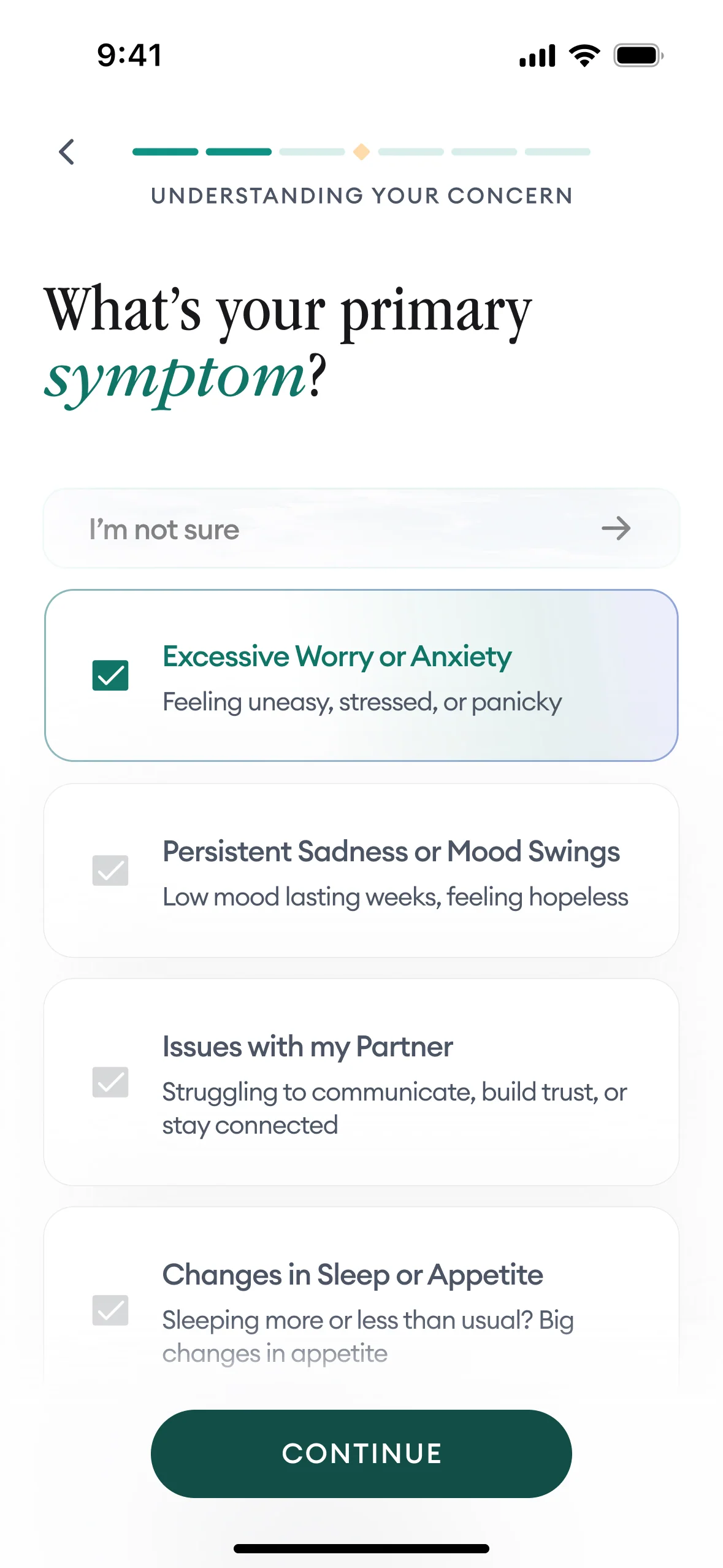
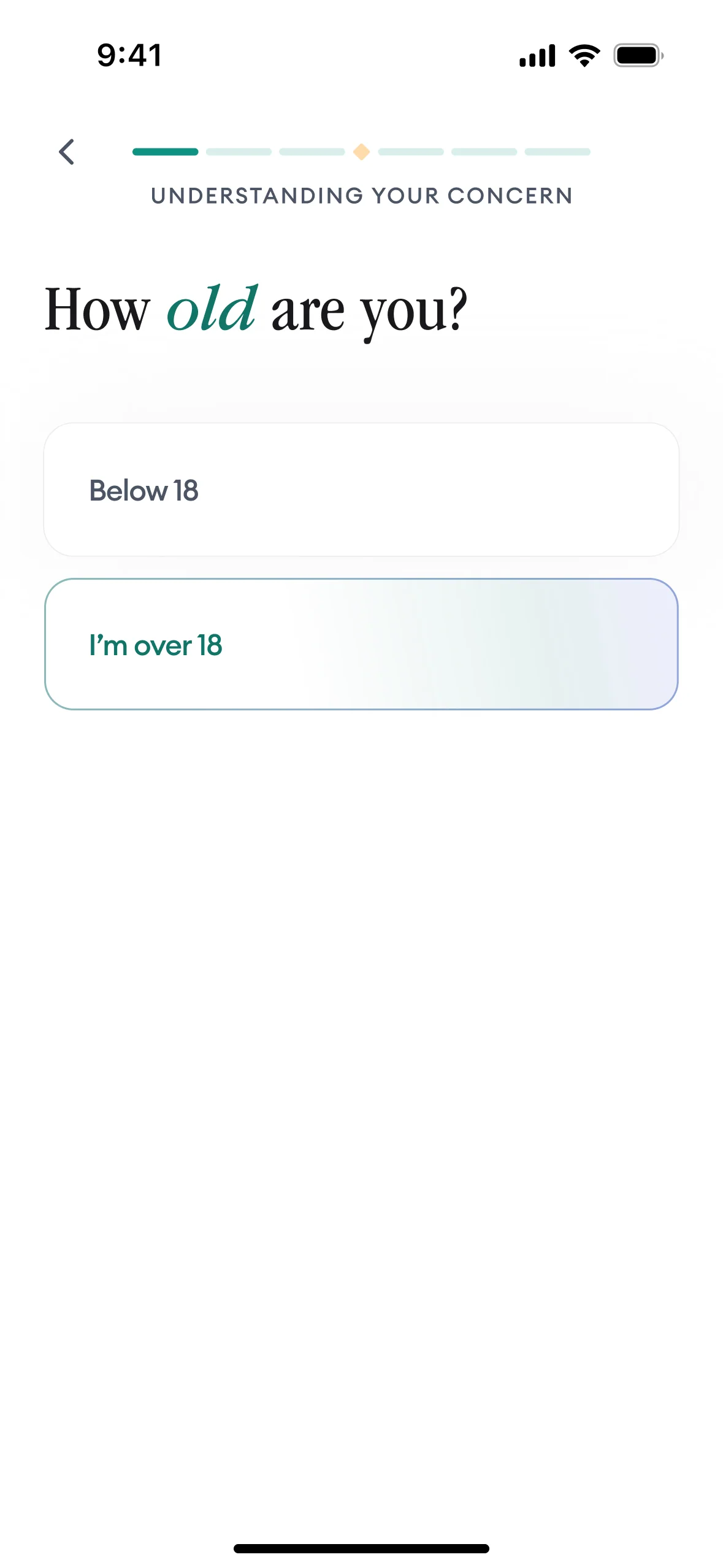
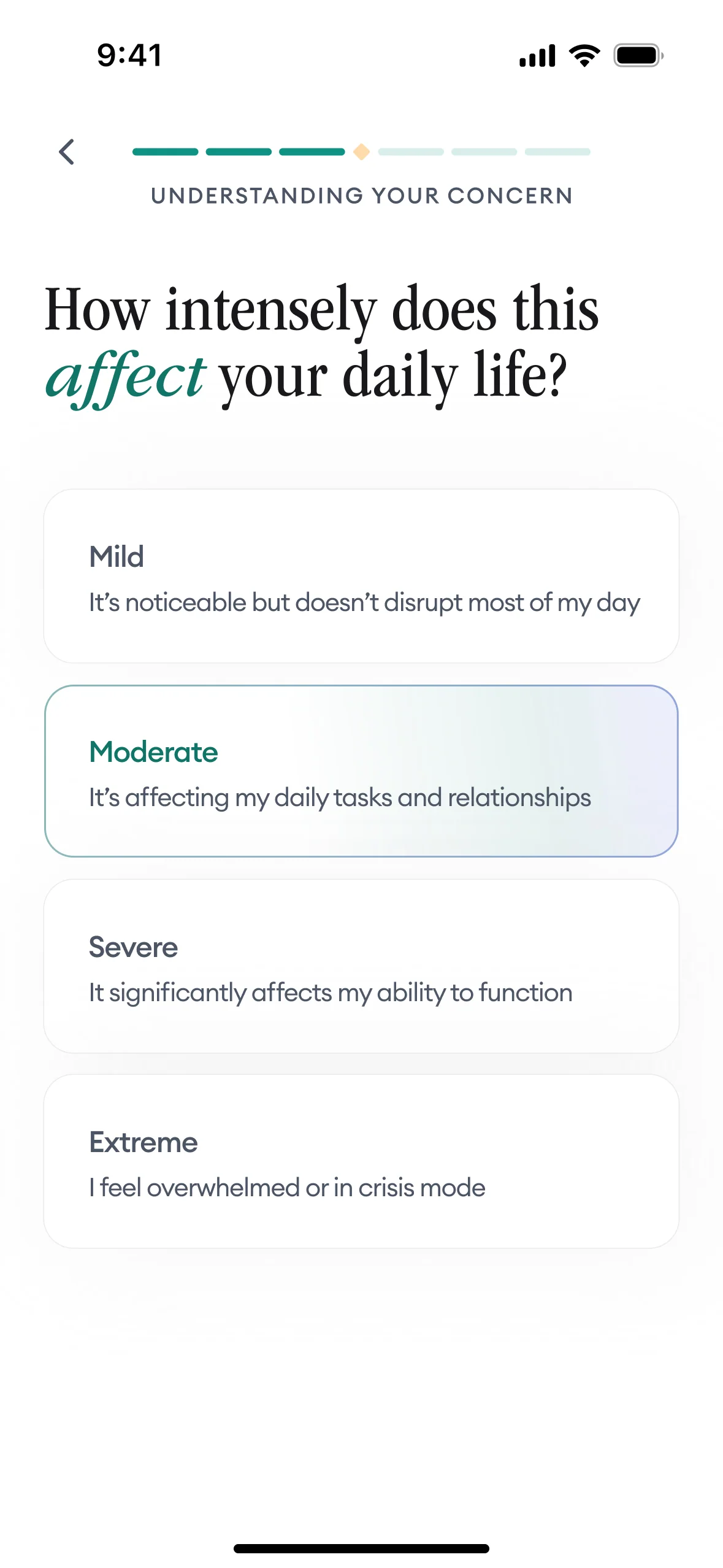
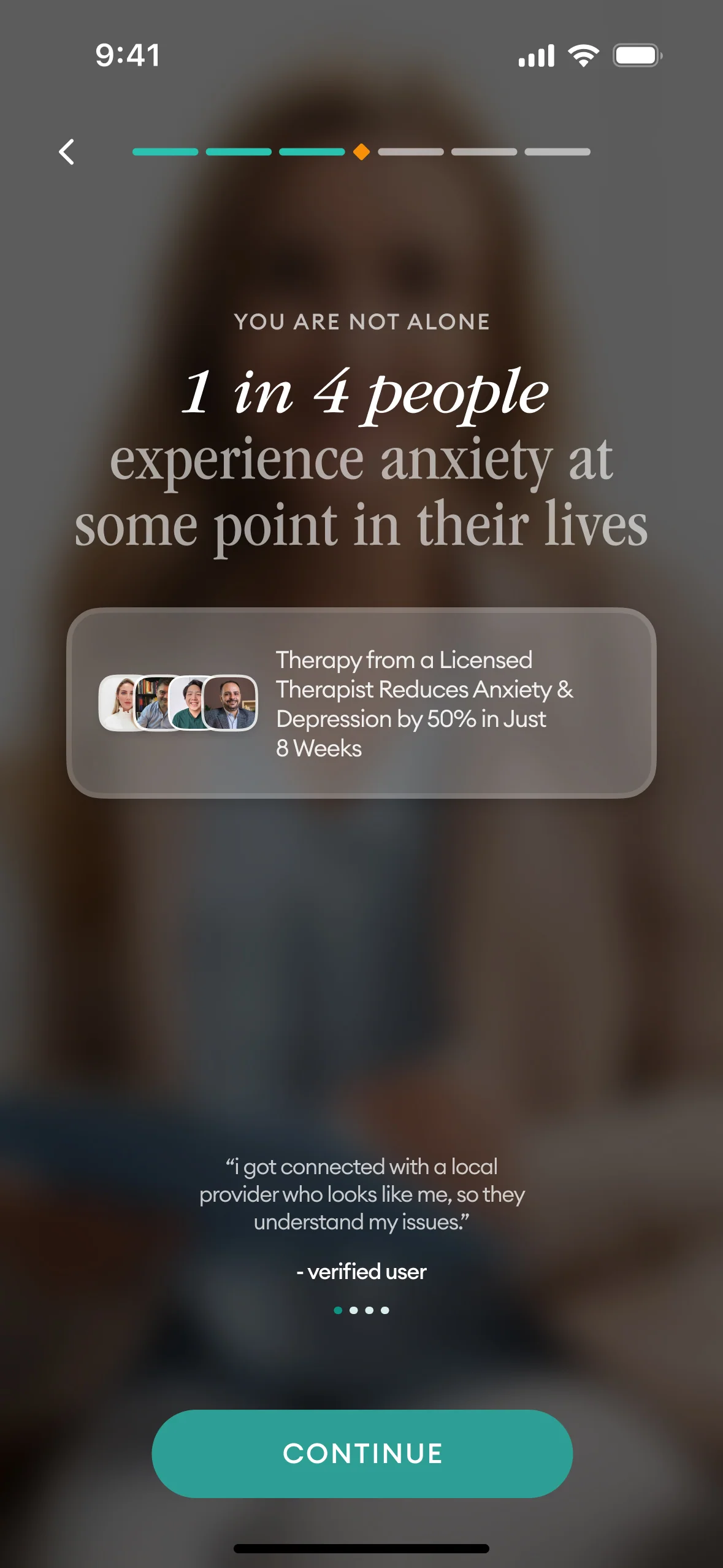
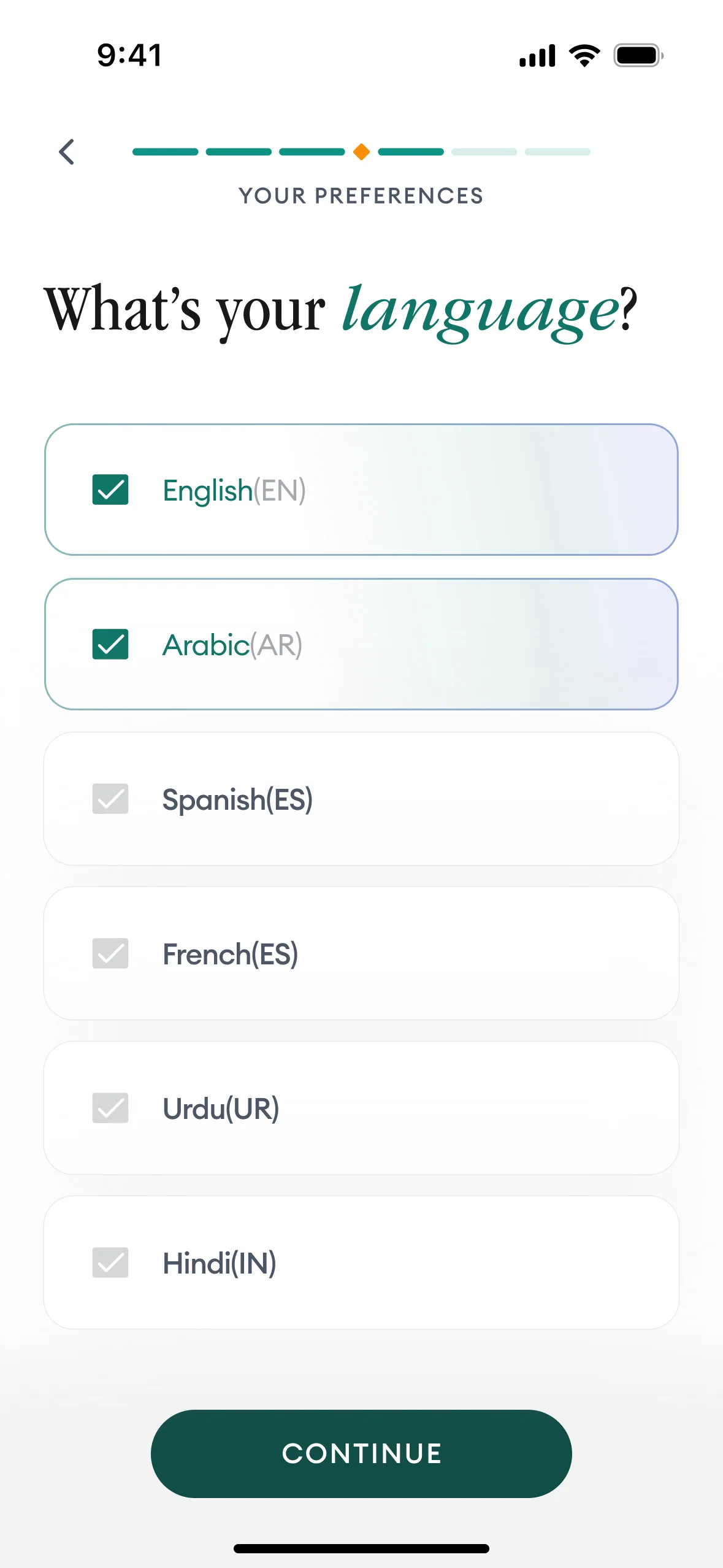
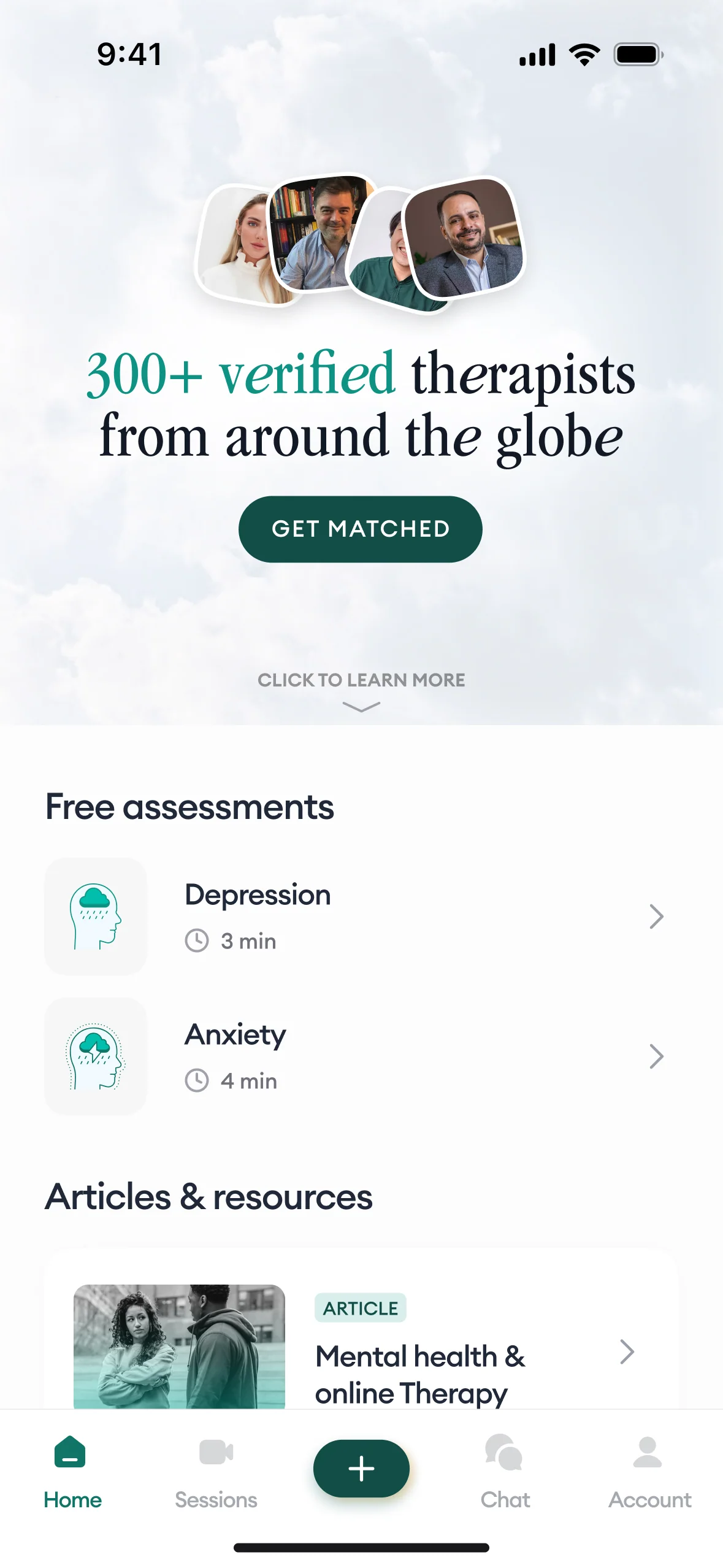
We replaced the queue with a guided assessment. It asks about symptoms and their intensity the way an intake call would, and between the clinical questions it offers something most forms don't: reassurance. One in four people experience anxiety at some point in their lives. Reading that mid-assessment changes how the next question feels.
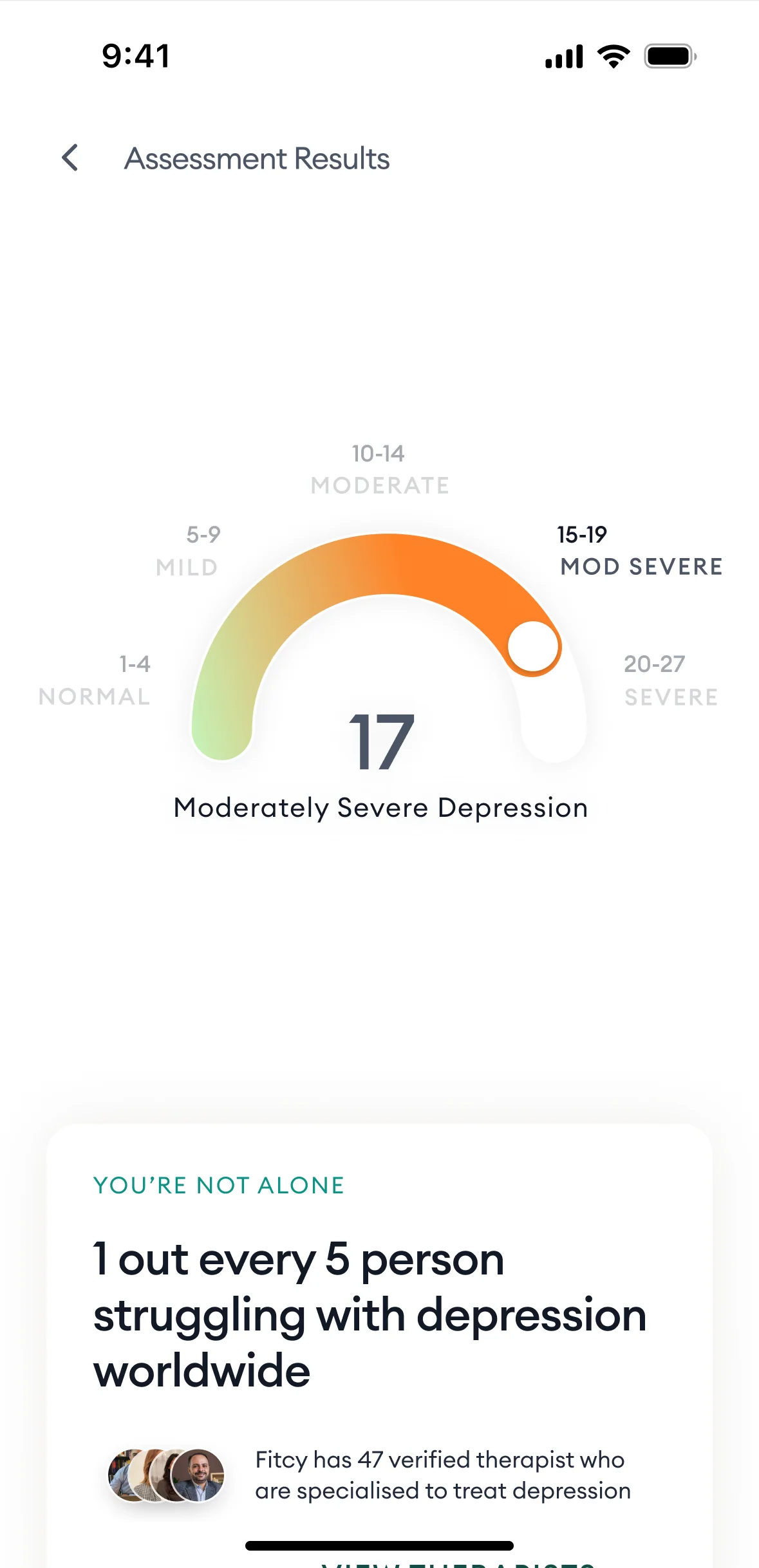
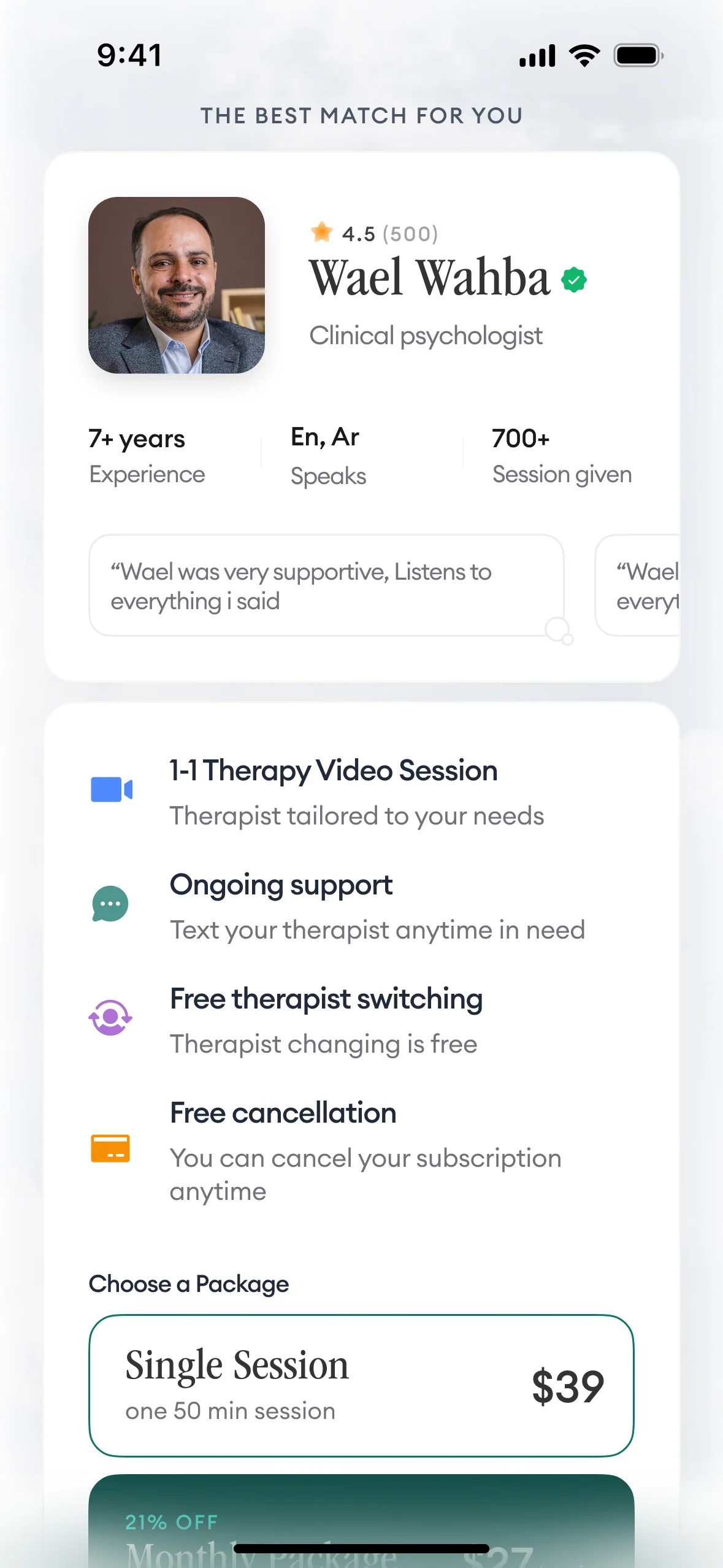
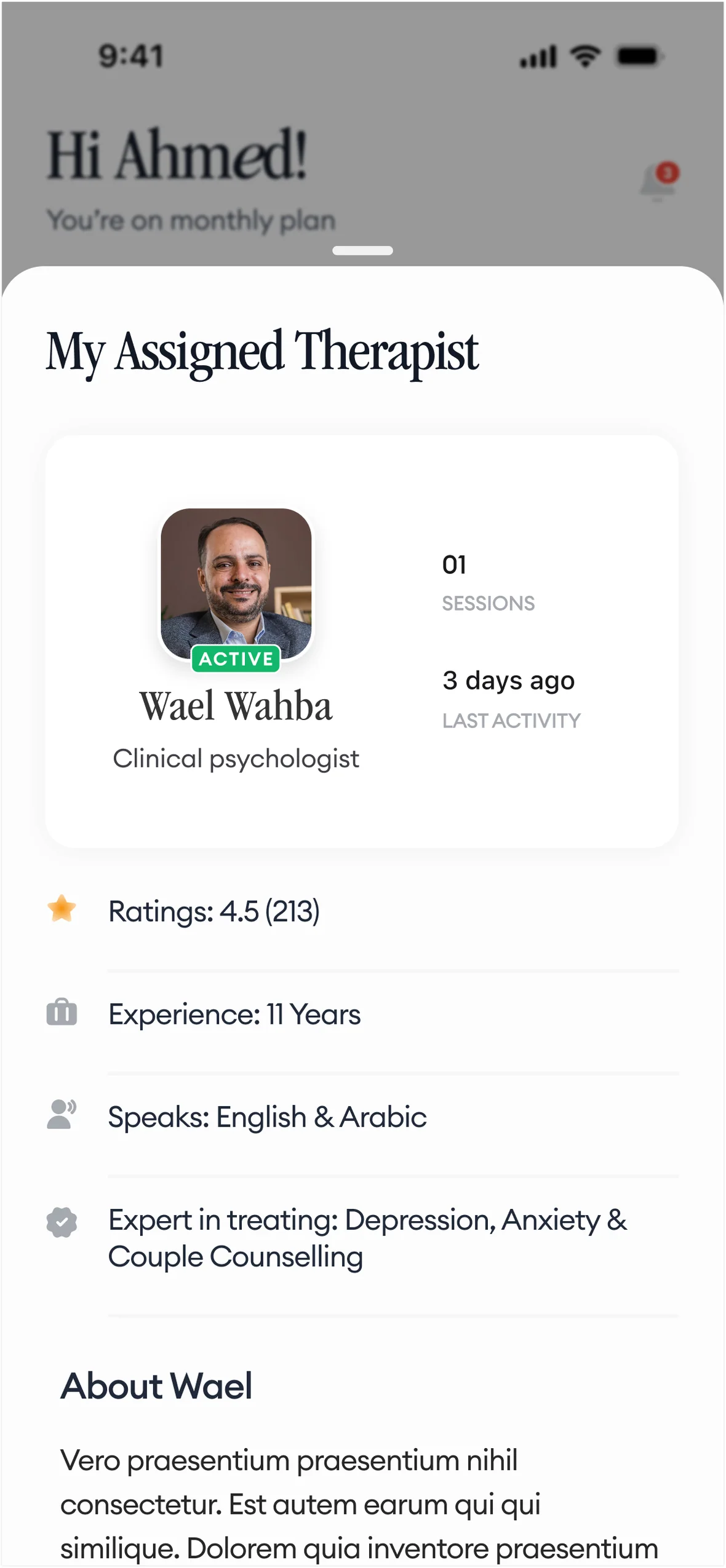
The results screen gives a straight answer, severity score included, followed by the message a good clinician leads with: you're not alone. Then it presents one person. Not a directory to scroll through, a single best match with a face, credentials, and ratings, picked against the assessment answers.
Session Management
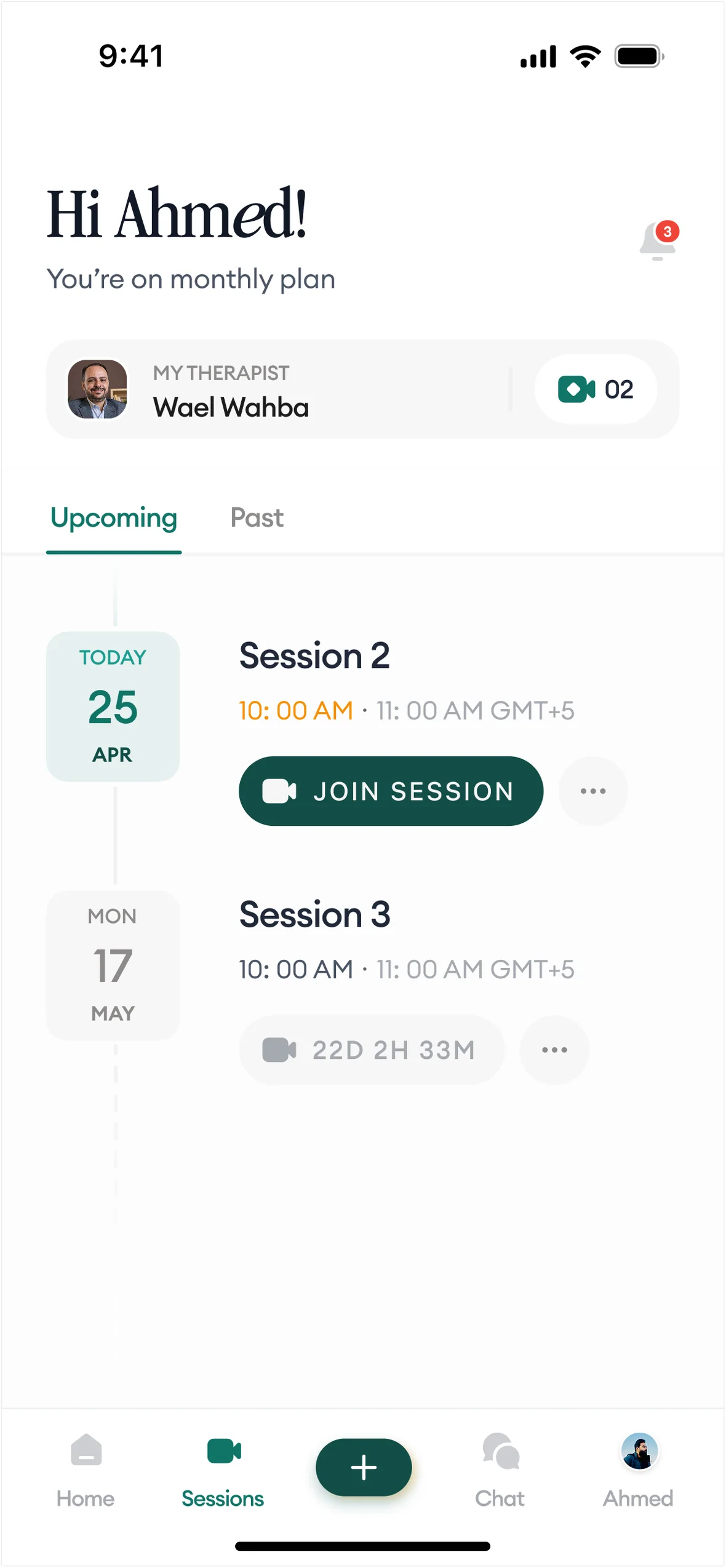
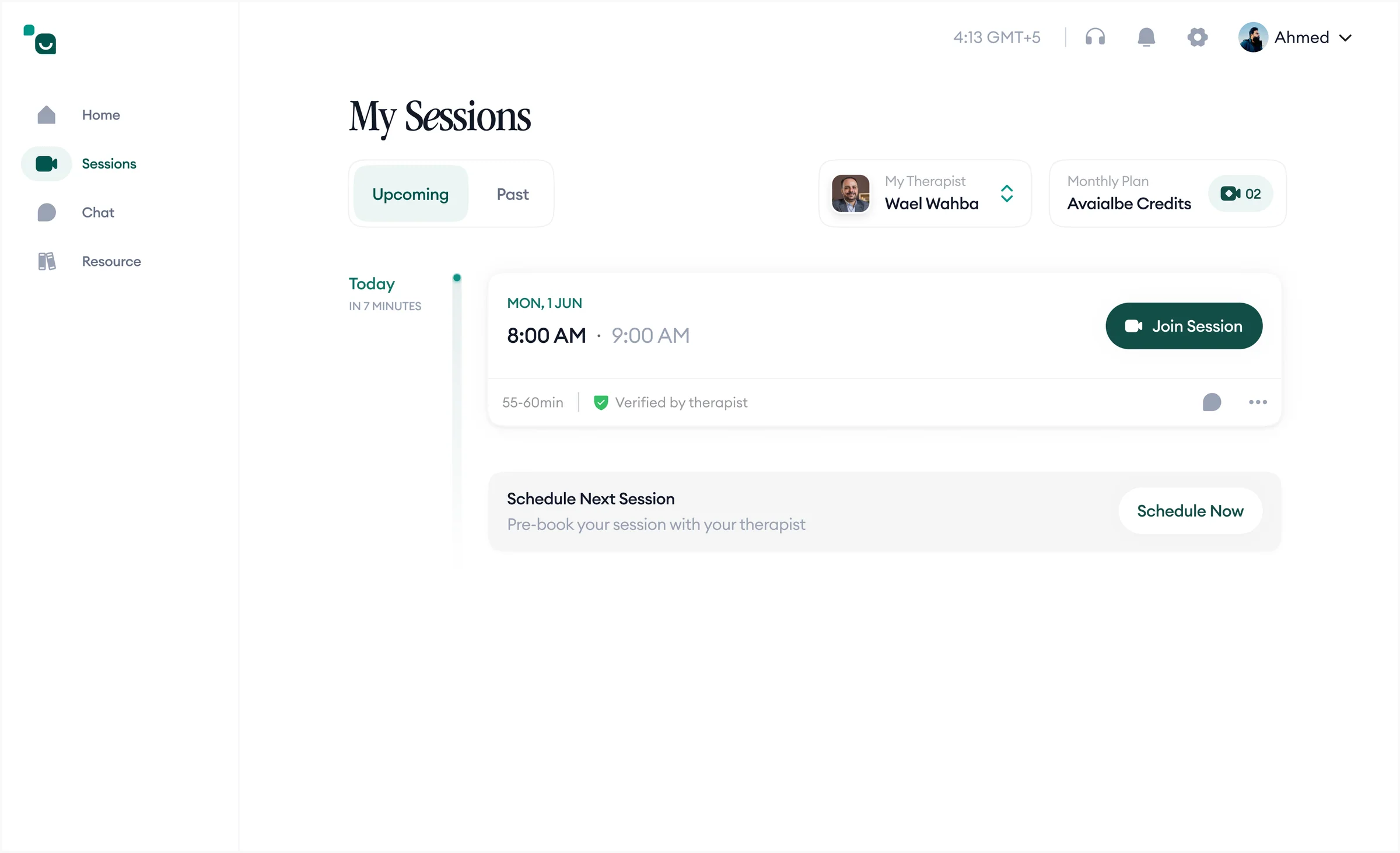
Once matched, everything about a session lives in one place. The session list is the home screen, not a buried tab, because the product only works if people keep showing up. Clients see what's next, join from mobile or web in one tap, and pick up the resources their therapist recommended between sessions. The web view adds the monthly plan and scheduling, which people prefer to handle on a bigger screen.
Joining a Session
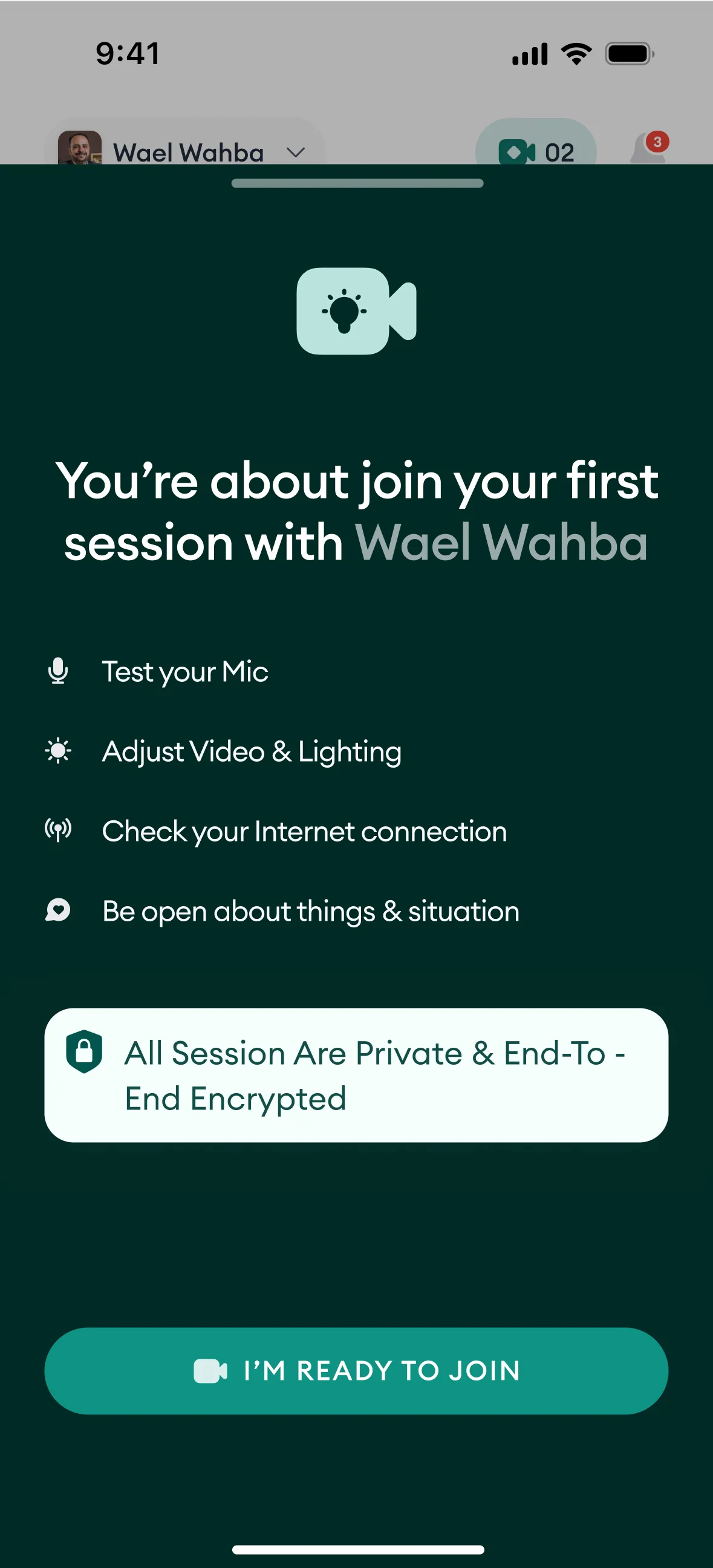
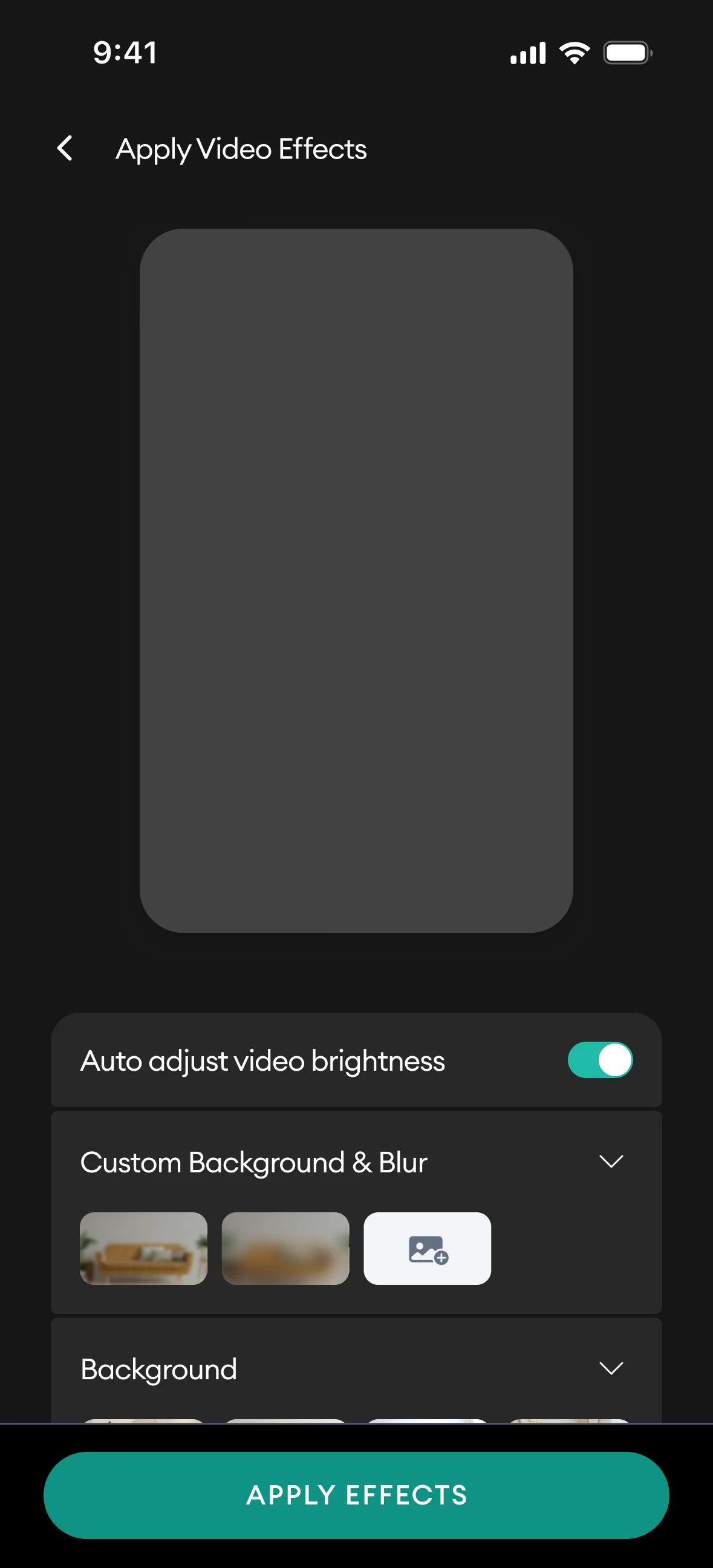
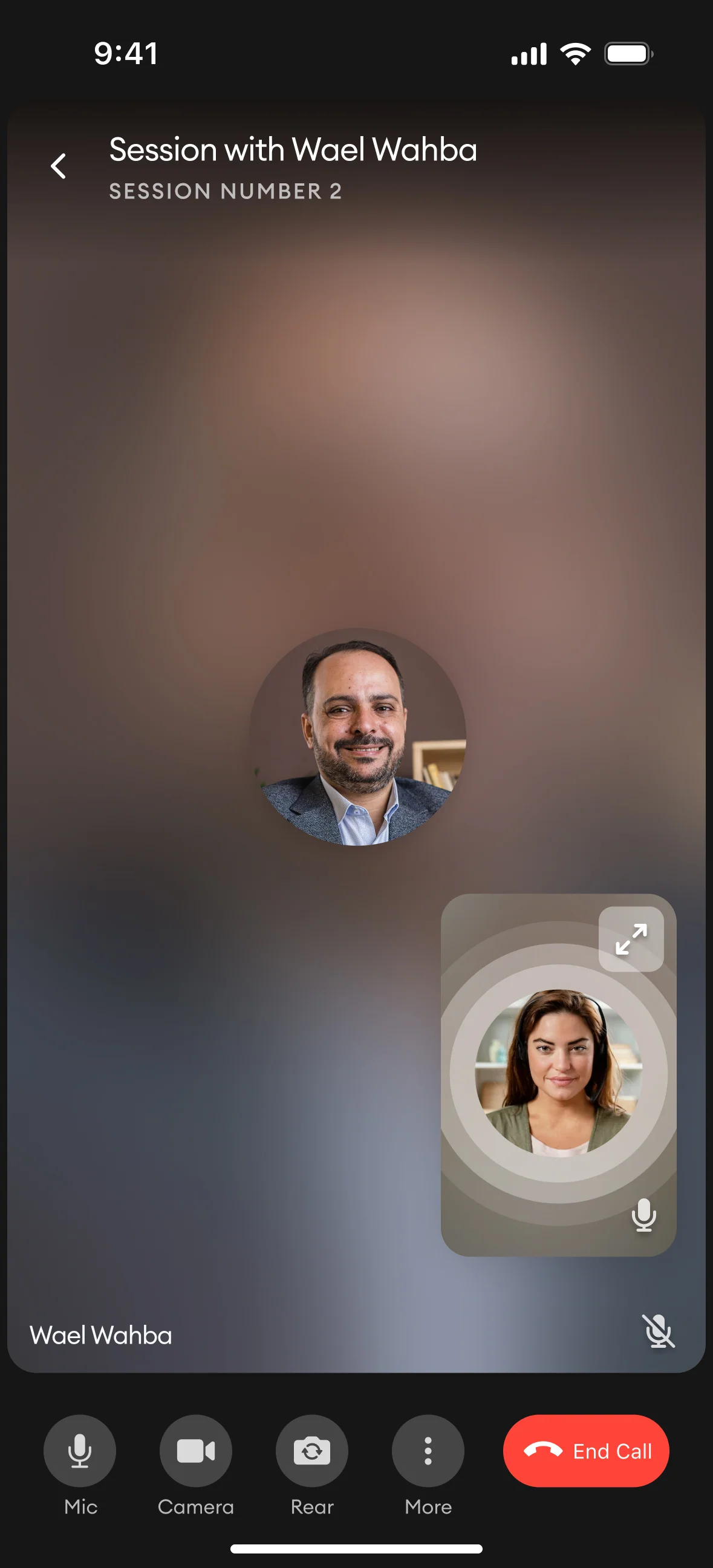
A first therapy session is nerve-wracking enough without a microphone that doesn't work. The pre-call lobby walks through mic, video, and connection checks before the join button does anything. Video effects sit on the same screen: auto brightness, custom backgrounds, blur. Blurring the room behind you matters more in therapy than it does in a work call. For some clients, that bit of privacy decides whether the camera goes on at all.
Messages
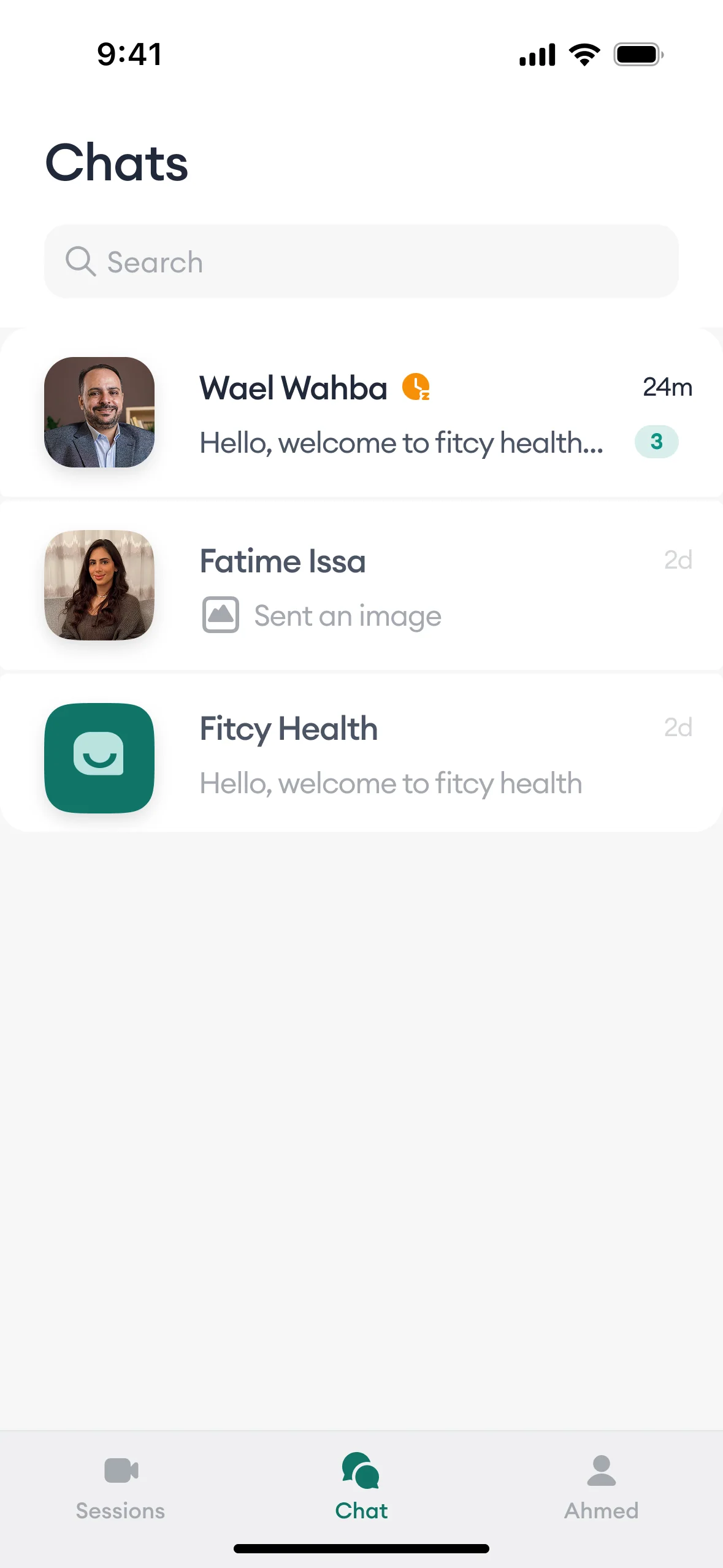
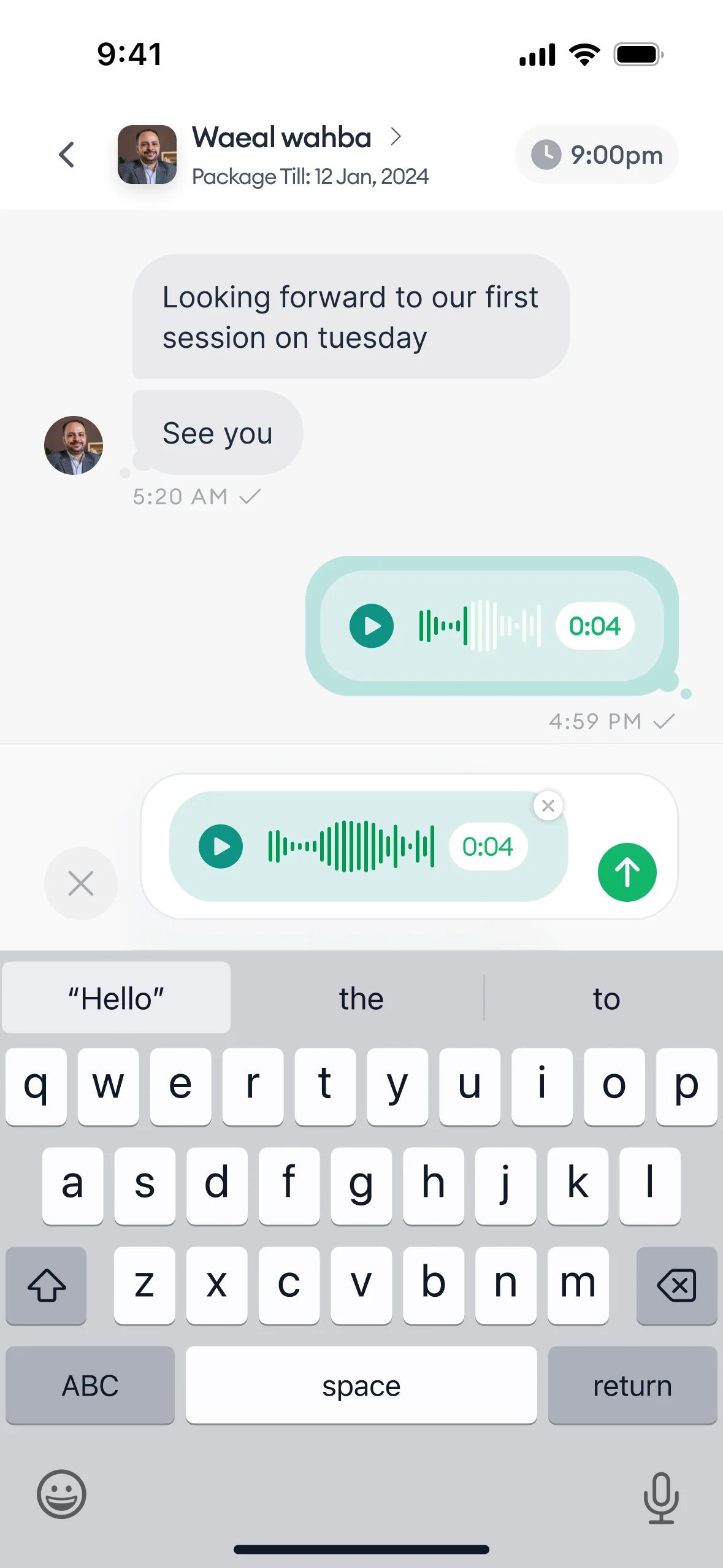
Therapy doesn't stop between sessions, and neither do the questions. The inbox keeps clinical threads separate from admin ones, so a billing reply never lands on top of a message from your therapist. Inside a thread, clients can send text, voice notes, and images in one stream. Voice notes earn their place here. Saying a hard thing out loud is often easier than typing it.
Profile & Account
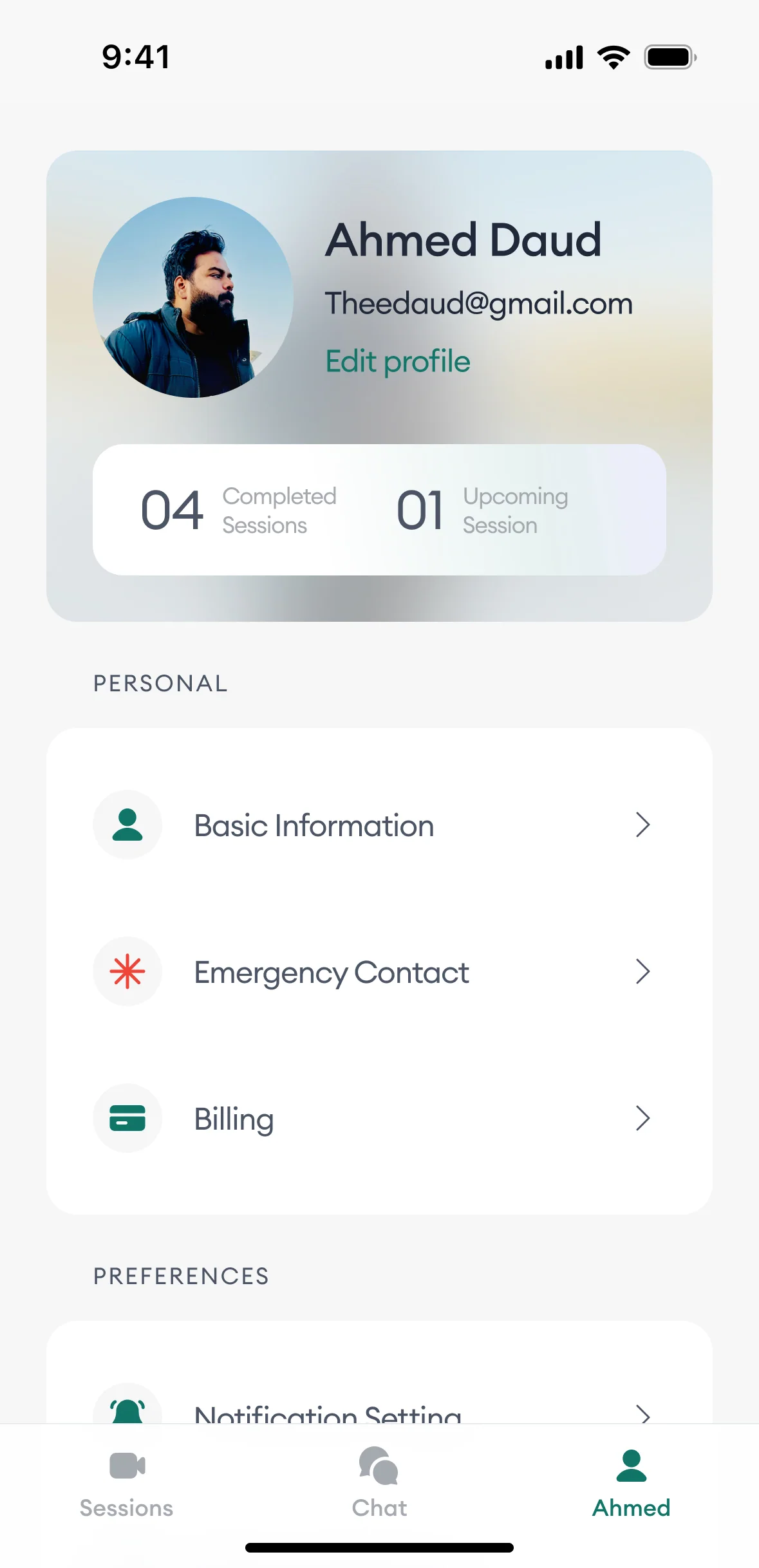
The account screen holds the things people need rarely but urgently. Personal details, billing, emergency contact, and notification preferences sit one tap deep, with completed and upcoming session counts at the top. Nothing clever, on purpose. Whoever opens this screen wants an answer, not an experience.
Outcomes
+25%
Booking conversion
+10%
Therapist retention
4
Surfaces designed across the platform
The conversion lift came from removing the wait. Matching that used to depend on one person's working hours now finishes in minutes, at the moment someone decides they're ready.
Next Case Study
SaveLife.AI™
RadioView.AI™
An AI co-pilot for radiologists. Dictate the read, get a structured report.
1M+ reports generated